Heat and UVBComparison
Reptile Heat Lamps, Heat Mats and Thermostats: What to Use Where
Basking bulbs, halogens, heat projectors, ceramic emitters, heat mats and panels compared, and the thermostat each needs, from maker manuals, VCA and the RSPCA.
We earn from qualifying purchases through links on this page. How we make money.
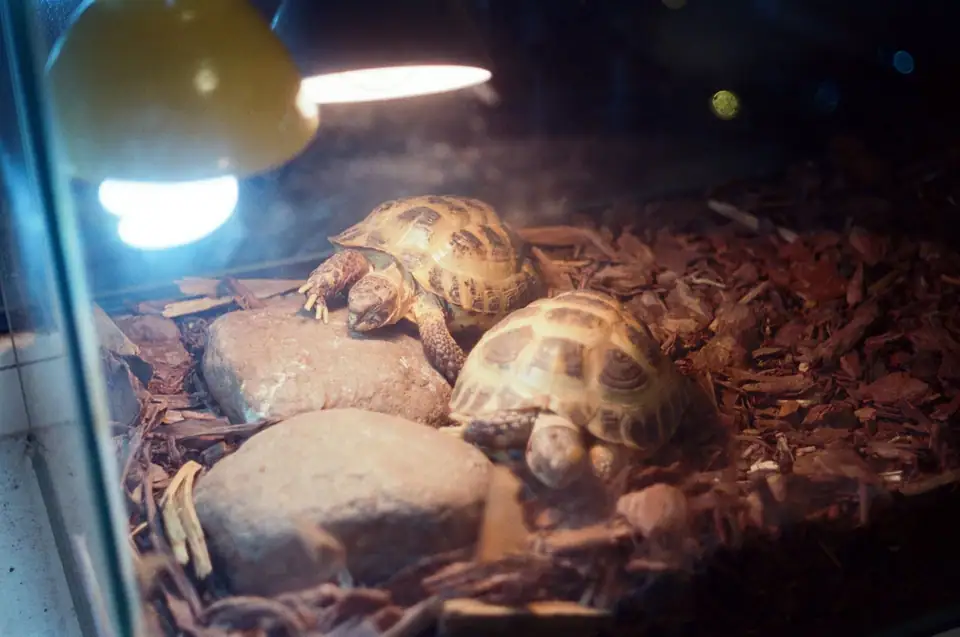
Put every reptile heat source on a thermostat, as the RSPCA directs. Basking bulbs and halogens give light and heat by day; deep heat projectors and ceramic emitters heat without light, day or night; mats warm from below. Makers pair dimming thermostats with bulbs and projectors, and the RSPCA uses on/off thermostats for mats.
Heat sources compared
| Heater | Light? | What the maker or vet source says | Control |
|---|---|---|---|
| Incandescent basking bulb | Yes | VCA lists a bulb in a reflector hood, placed outside the enclosure above one end | Dimming thermostat |
| Halogen flood lamp | Yes | Arcadia: a powerful wide-beam flood lamp | “A suitable dimming thermostat” (Arcadia) |
| Deep heat projector | Virtually none | Arcadia: can run through the day and night | Thermostat; dimming for accurate control (Arcadia) |
| Ceramic heat emitter | None | Zoo Med: a 24-hour heat source giving intense infrared heat | Thermostat or rheostat (Zoo Med) |
| Under-tank heat mat | None | Zoo Med ReptiTherm: glass terrariums only, not wood, plastic or fiberglass cages (one Mini model excepted) | On/off thermostat, probe over the mat (RSPCA) |
| Radiant heat panel | None | Vivarium Electronics: a touch-proof design | The maker’s own thermostats |
| Mercury vapor lamp | Yes, plus UVB | Zoo Med PowerSun: UVA, UVB and heat in one lamp | Never a dimmer (Zoo Med) |
Arcadia publishes how hot its Deep Heat Projector makes the basking zone:
| Distance | 50 W projector | 80 W projector |
|---|---|---|
| 6 in | 55°C (131°F) | 62°C (144°F) |
| 8 in | 45°C (113°F) | 51°C (124°F) |
| 12 in | 36°C (97°F) | 44°C (111°F) |
| 16 in | 29°C (84°F) | 36°C (97°F) |
The Fahrenheit figures are our conversions. The table shows why a thermostat matters: a few inches change the basking temperature by 10°C or more.
Mounting and guards
Zoo Med says never to mount its ceramic heat emitter inside an enclosure, calling it a serious fire and burn hazard. The RSPCA says a heat source must have a guard so the reptile cannot be burned or injured if the bulb shatters, and the UV-Tool paper says all bulbs should be out of the animal’s reach.
Basking bulbs, deep heat projectors, ceramic emitters and guards
Live listings, shown by eBay
Opens eBay in a new tab. Check condition, seller feedback and returns.
Which thermostat for which heater?
| Thermostat type | How it works | Best with |
|---|---|---|
| On/off | Switches the heater on below the set temperature (Zoo Med ReptiTemp in heat mode) | Heat mats (RSPCA), ceramic emitters |
| Pulse proportional | Sends varied pulses of power; Spyder Robotics says it can avoid hum on metal racks | Heaters in metal rack systems (Spyder Robotics) |
| Dimming | Adjusts the voltage like a household dimmer; Spyder Robotics calls it the best performing mode in most cases | Light-emitting heaters and deep heat projectors (Arcadia) |
Arcadia explains the dimming choice: switching a bulb fully on and off would be visible to the animal and can shorten lamp life. Zoo Med adds that its ReptiTemp thermostat must not control mercury vapor lamps, compact fluorescent lamps or rock heaters.
Placement matters as much as the type. The RSPCA puts a heat mat’s probe directly over the mat, and for a heat lamp puts a dimming thermostat’s probe above the substrate in the basking zone.
Dimming and proportional thermostats and heat mats
Live listings, shown by eBay
Opens eBay in a new tab. Check condition, seller feedback and returns.
Do you need a thermostat on a heat mat?
The sources disagree. The RSPCA says a thermostat must be used with all heat sources and connects mats to an on/off unit. VCA says thermostats keep a heating pad from getting too hot and burning the lizard. Zoo Med’s under-tank heater sheet recommends one only if room temperatures can rise above 80°F. We follow the RSPCA: a thermostat on every heater.
Where the heat goes, day and night
VCA says heat sources for a bearded dragon should always sit outside the enclosure, above one end, so the other end stays cooler and the lizard can move between them. The same warm-end, cool-end layout runs through every species guide on this site.
Night is where the heater choice changes. A basking bulb gives light, so it goes off with the day lights. For nights that get too cold, the RSPCA uses a ceramic heater, which gives no light, set on a thermostat: for leopard geckos only if the room drops below 18°C (64°F). Arcadia says its Deep Heat Projector, which gives virtually no visible light, can run through the day and night. VCA lets bearded dragon nights fall to 65 to 80°F, so check the night temperature with a thermometer before adding a night heater.
Burns and hot rocks
VCA’s snake problems page says burns happen when a reptile, seeking a warm place, finds one that is too hot or stays there too long. VCA calls hot rocks “dangerous, ineffective” and notorious for burning reptiles. Zoo Med’s own rock heater instructions warn that covering the heater can make temperatures escalate to an unsafe level. Spyder Robotics does not recommend its Herpstat for rock heaters or other devices the animal touches directly. We do not list heat rocks.
See a reptile vet
If your reptile is burned, see a reptile veterinarian. VCA says any change from normal is cause for concern and should be evaluated by your veterinarian right away.
Check the numbers every day
The RSPCA says thermostats are not always accurate, so check every day with a digital thermometer in the basking zone and another at the cool end; an infrared thermometer can also be used. VCA suggests a thermometer at each end or an electronic temperature gun aimed at either end.
For target temperatures by species, see the bearded dragon, leopard gecko and ball python guides, and pair heat with the right lamp from the UVB lighting guide. For backup power in a winter outage, our sister site Winter Storm Gear covers portable generators. The reptile supplies checklist lists everything else.
Frequently asked questions
Does every reptile heat lamp need a thermostat?
The RSPCA says a thermostat must be used with all heat sources. Zoo Med's under-tank heater sheet only recommends one when room temperature can rise above 80°F, so the sources differ; the RSPCA rule is the safer one to follow.
What is the difference between a ceramic heat emitter and a deep heat projector?
Both heat without visible light, so both can run day and night. Zoo Med sells its ceramic heat emitter as a 24-hour heat source to control with a thermostat, and Arcadia recommends a dimming thermostat for its Deep Heat Projector.
Which thermostat do I need for a heat mat?
The RSPCA connects a heat mat to an on/off thermostat with the probe directly over the mat. Dimming thermostats are for light-emitting heaters and heat projectors, according to Arcadia.
Are heat rocks safe for reptiles?
VCA calls hot rocks and sizzle rocks dangerous, ineffective and notorious for burning reptiles. Spyder Robotics says its Herpstat is not recommended with rock heaters or other devices the animal touches.
How do I check the temperature in a reptile enclosure?
The RSPCA says thermostats are not always accurate and to check every day with a digital thermometer in the basking zone and another at the cool end. An infrared thermometer or temperature gun works too, according to the RSPCA and VCA.
Sources
- How To Care For a Leopard GeckoRSPCA
- How To Care For Your Bearded DragonRSPCA
- Bearded Dragons - HousingVCA Animal Hospitals
- Bearded Dragons - DiseasesVCA Animal Hospitals
- Snakes - ProblemsVCA Animal Hospitals
- Halogen Heat LampArcadia Reptile
- Deep Heat ProjectorArcadia Reptile
- Dimming ThermostatArcadia Reptile
- ReptiCare Ceramic Infrared Heat EmitterZoo Med Laboratories
- Ceramic Heat Emitter instructionsZoo Med Laboratories
- ReptiTherm Under Tank Heater instructionsZoo Med Laboratories
- ReptiTemp RT-600 thermostat instructionsZoo Med Laboratories
- Rock Heater instructionsZoo Med Laboratories
- PowerSun UVZoo Med Laboratories
- Herpstat 1 and 2 manualSpyder Robotics
- Heating (radiant heat panels)Vivarium Electronics
- How much UVB does my reptile need? The UV-Tool, a guide to the selection of UV lighting for reptiles and amphibians in captivity (Baines et al. 2016)Journal of Zoo and Aquarium Research
- Reptiles and Amphibians (Healthy Pets)CDC
Filed under Heat and UVBStart here: Reptile Supplies Checklist: What Every Enclosure Needs, by Species
Related setups and guides
Checklist
Reptile Supplies Checklist: What Every Enclosure Needs, by Species
The supplies every reptile enclosure needs, and a species table of adult size, enclosure, basking heat, UVB zone and diet, each from a named vet or zoo source.
Comparison
Reptile UVB Lighting: T5 HO vs Compact vs Mercury Vapor, by Species
UVB zones by species from the UV-Tool study, T5 HO vs T8 vs compact vs mercury vapor lamps, distances, mesh losses and replacement intervals from the makers.
Comparison
Ball Python Enclosure: PVC vs Glass, Humidity and Heat
Ball python enclosure size, PVC vs glass vs wood, humidity for clean sheds, heat on a thermostat, hides and substrate, from VCA, the RSPCA and a herp society.
Setup guide
Bearded Dragon Enclosure: Size, Setup and the Gear It Needs
How big a bearded dragon enclosure should be, basking and cool-side temperatures, UVB, heat, substrate and hides, from VCA, the RSPCA and the UV-Tool study.