EnclosuresSetup guide
Bearded Dragon Enclosure: Size, Setup and the Gear It Needs
How big a bearded dragon enclosure should be, basking and cool-side temperatures, UVB, heat, substrate and hides, from VCA, the RSPCA and the UV-Tool study.
We earn from qualifying purchases through links on this page. How we make money.
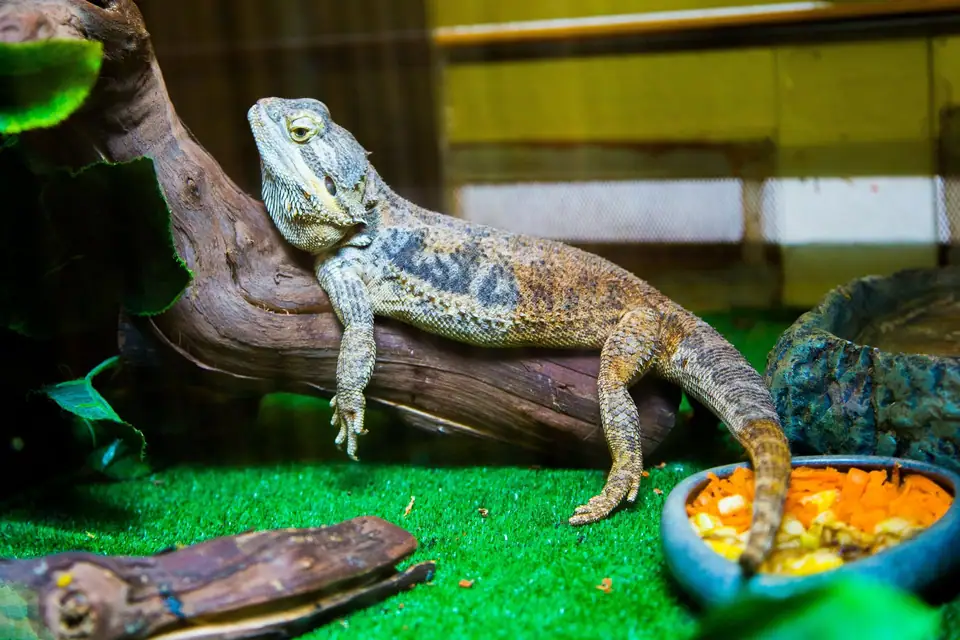
An adult bearded dragon needs an enclosure of at least 60 to 100 gallons (VCA), and the RSPCA sets the minimum at 120 by 60 by 60 cm, about 4 by 2 by 2 feet. Inside it needs a basking spot near 90 to 100°F, a cooler end, strong UVB, a thermostat, hides and a safe floor.
How big should a bearded dragon enclosure be?
VCA puts adults at 18 to 22 inches from nose to tail tip, and the RSPCA at about 45 cm. That is a lot of lizard for a small tank, and the sources size enclosures accordingly:
| Source | Juvenile | Adult |
|---|---|---|
| VCA Animal Hospitals | At least a 20-gallon tank | 60 to 100 gallons or larger |
| RSPCA | Not stated separately | Minimum 120 cm long, 60 cm high, 60 cm wide |
| Washington State University | Length rule | At least three times the dragon’s total body length |
The RSPCA figure is close to the 4 by 2 by 2 foot (48 by 24 by 24 inch) enclosures sold for bearded dragons. By our calculation that is about 120 gallons, which is why “120 gallon” and “4x2x2” describe the same tank. A dragon lives for years: VCA says about 7 to 12, the RSPCA 10 to 15 or more. Buying the adult size once avoids a second enclosure.
Glass, PVC or wood? None of our vet sources ranks the materials. What they do agree on is size, heat from above one end, and no glass or plastic between the UVB lamp and the lizard. If you plan an under-tank heater, check the maker’s rules: Zoo Med says its ReptiTherm pads are for glass terrariums only.
4x2x2 and 120-gallon enclosures: glass, PVC and wood
Live listings, shown by eBay
Opens eBay in a new tab. Check condition, seller feedback and returns.
What temperatures does a bearded dragon need?
A dragon warms up under a hot basking spot and cools off at the other end, so the enclosure needs both. The sources agree on the shape and differ a little on the numbers:
| Zone | VCA | RSPCA | Washington State University |
|---|---|---|---|
| Basking or warm end | 90 to 100°F | 38 to 42°C (about 100 to 108°F) | 95 to 110°F |
| Cool end | About 75 to 80°F | 22 to 26°C (about 72 to 79°F) | 75 to 80°F |
| Night | 65 to 80°F | Not below 20 to 22°C (about 68 to 72°F) | Not stated |
VCA says to place one thermometer at the cool end and another at the warm end near the heat source, or to check both ends with an electronic temperature gun. Humidity should stay low: the RSPCA and Washington State University both give 30 to 40 percent.
Heat: lamps above, on a thermostat
VCA says heat sources should always be placed outside the enclosure, above one end of it, and lists incandescent bulbs in a reflector hood, other radiant heat bulbs and ceramic heating elements. The RSPCA adds that a thermostat must regulate the temperature and that the bulb needs a wire mesh guard so it cannot burn the dragon.
Burns and hot rocks
VCA calls hot rocks and sizzle rocks “dangerous, ineffective” and notorious for burning reptiles. Keep every heat source out of reach behind a guard, and put it on a thermostat. The heat lamps and thermostats guide explains which thermostat suits which heater.
Basking bulbs, heat projectors and lamp guards
Live listings, shown by eBay
Opens eBay in a new tab. Check condition, seller feedback and returns.
UVB: the one piece you cannot skip
VCA calls UV lights essential and says failing to provide them can predispose a dragon to metabolic bone disease. The UV-Tool study (Baines et al. 2016) places bearded dragons in Ferguson zone 3 to 4, the full sun baskers, and the RSPCA asks for a UV Index of 3.0 to 5.0 in the basking zone, falling to zero in the shade, from a high-output 10 to 12 percent tube.
UVB through a screen top
Glass and most plastics block UVB, according to Zoo Med and VCA, so the lamp must shine through mesh or sit inside the enclosure. Mesh still costs output: Arcadia says a mesh lid blocks about 30 percent, and Zoo Med says fine mesh blocks up to 50 percent. VCA puts the lamp 6 to 18 inches from the dragon.
Replacement advice varies even within one source: VCA’s bearded dragon page says every six months, its general lighting page every 9 to 12 months, and Washington State University every 6 to 8 months for juveniles and yearly for adults. Follow the lamp maker’s interval. The UVB lighting guide compares T5 tubes, compact lamps and mercury vapor bulbs.
T5 HO UVB fixtures and tubes for bearded dragons
Live listings, shown by eBay
Opens eBay in a new tab. Check condition, seller feedback and returns.
Substrate and hides
This is where the sources disagree most. VCA prefers newspaper, butcher paper or recycled paper pellets and says not to use sand, gravel, wood shavings, corncob, walnut shells or cat litter because they can cause intestinal impaction if eaten. The RSPCA allows reptile-safe sand or rough stone tiles, but calls calcium sand dangerous for the same blockage risk.
For hides, VCA says all reptiles appreciate a hiding place, and the RSPCA asks for a hide at both ends. Add a heavy water bowl that cannot tip, which VCA’s feeding page asks for as well.
Full setup parts list
- Enclosure: 60 to 100 gallons or more (VCA), or 4 by 2 by 2 feet (RSPCA).
- Basking lamp with a guard, on a dimming thermostat.
- T5 UVB tube and fixture sized for zone 3 to 4.
- Two thermometers or a temperature gun, plus a hygrometer.
- Two hides, a basking platform, a water bowl and paper or tile flooring.
- Food, calcium and supplements: see what bearded dragons eat.
VCA also says a new dragon should see a veterinarian familiar with reptiles within 48 hours of purchase. The reptile supplies checklist covers the same list for every species on this site.
Frequently asked questions
How big of an enclosure does a bearded dragon need?
VCA says a juvenile needs at least a 20-gallon tank and an adult 60 to 100 gallons or more. The RSPCA sets a larger adult minimum of 120 by 60 by 60 cm, about the 4 by 2 by 2 foot enclosures sold for dragons, which works out near 120 gallons.
Is a 40-gallon tank big enough for a bearded dragon?
Only for a young dragon. VCA's adult range starts at 60 gallons and the RSPCA's minimum is about 120 gallons, so plan the adult enclosure from the start.
Should I mist my bearded dragon?
Bearded dragons live at low humidity: the RSPCA and Washington State University give 30 to 40 percent. VCA suggests misting vegetables or giving warm soaks a few times a week for hydration rather than misting the enclosure.
What is the best substrate for a bearded dragon?
Sources disagree. VCA prefers newspaper, butcher paper or recycled paper pellets and says not to use sand, gravel, wood shavings or corncob. The RSPCA allows reptile-safe sand but warns against calcium sand.
Can a UVB lamp sit on top of a screen lid?
Yes, but the mesh blocks part of the UVB. Arcadia puts the loss at about 30 percent and Zoo Med at up to 50 percent for fine mesh, so the lamp needs to be stronger or closer than it would be inside the enclosure.
Sources
- Bearded Dragons - HousingVCA Animal Hospitals
- Owning Bearded DragonsVCA Animal Hospitals
- Feeding Bearded DragonsVCA Animal Hospitals
- ReptiTherm Under Tank Heater instructionsZoo Med Laboratories
- Lighting Requirements for ReptilesVCA Animal Hospitals
- How To Care For Your Bearded DragonRSPCA
- Bearded dragon husbandryWashington State University Veterinary Teaching Hospital
- How much UVB does my reptile need? The UV-Tool, a guide to the selection of UV lighting for reptiles and amphibians in captivity (Baines et al. 2016)Journal of Zoo and Aquarium Research
- Full Sun Baskers (UVB lighting)Arcadia Reptile
- Lighting & UVB EducationZoo Med Laboratories
- Reptiles and Amphibians (Healthy Pets)CDC
Filed under EnclosuresStart here: Reptile Supplies Checklist: What Every Enclosure Needs, by Species
Related setups and guides
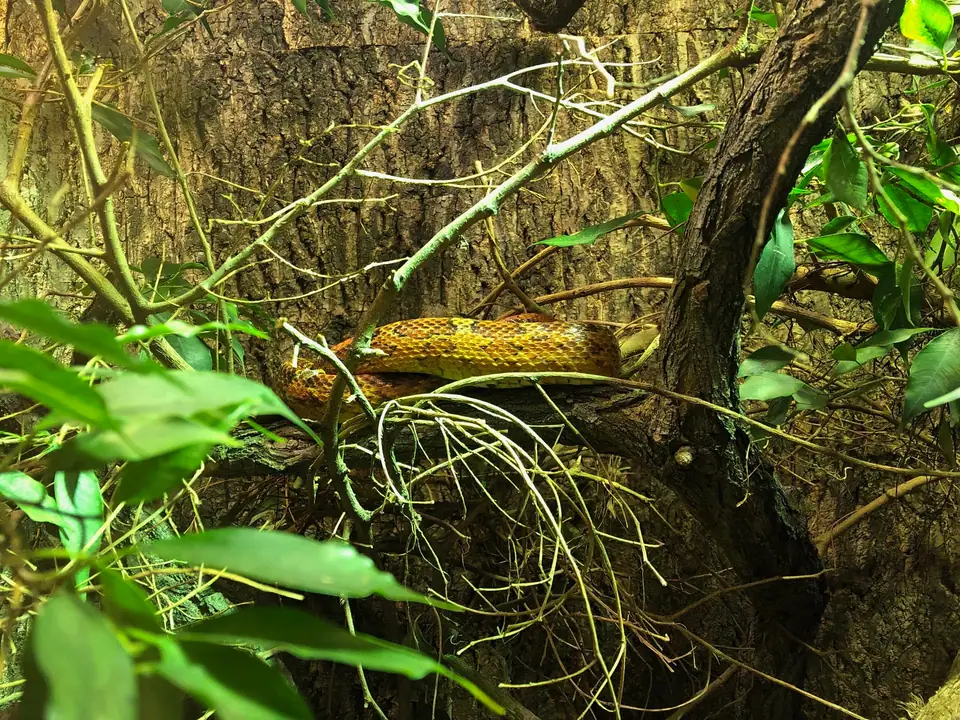
Checklist
Reptile Supplies Checklist: What Every Enclosure Needs, by Species
The supplies every reptile enclosure needs, and a species table of adult size, enclosure, basking heat, UVB zone and diet, each from a named vet or zoo source.
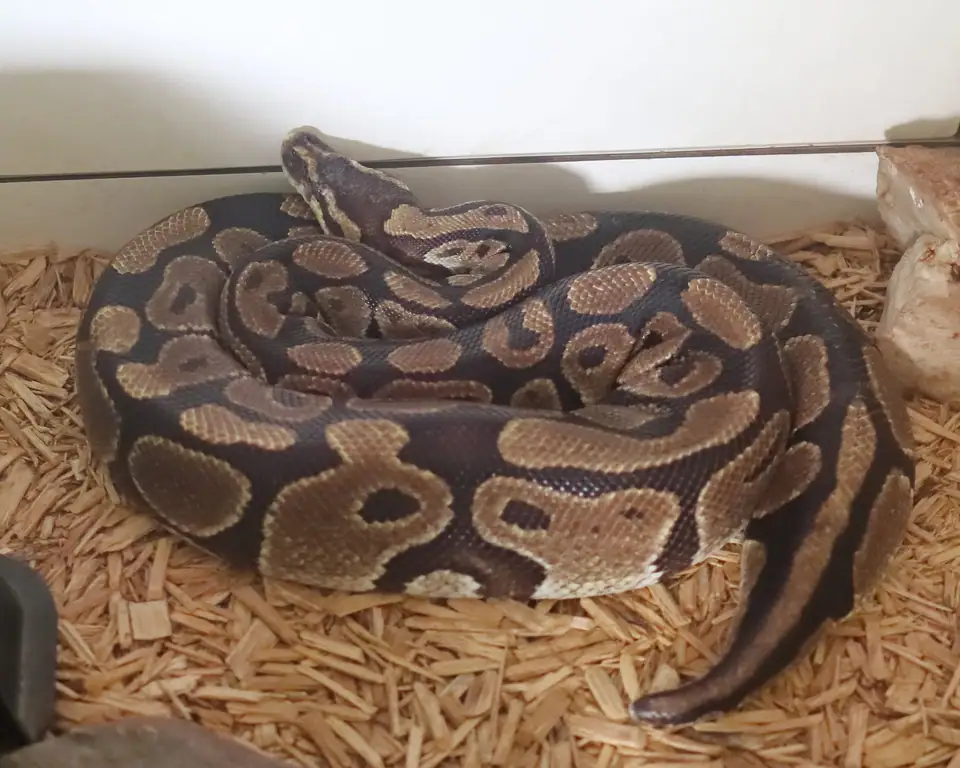
Comparison
Ball Python Enclosure: PVC vs Glass, Humidity and Heat
Ball python enclosure size, PVC vs glass vs wood, humidity for clean sheds, heat on a thermostat, hides and substrate, from VCA, the RSPCA and a herp society.
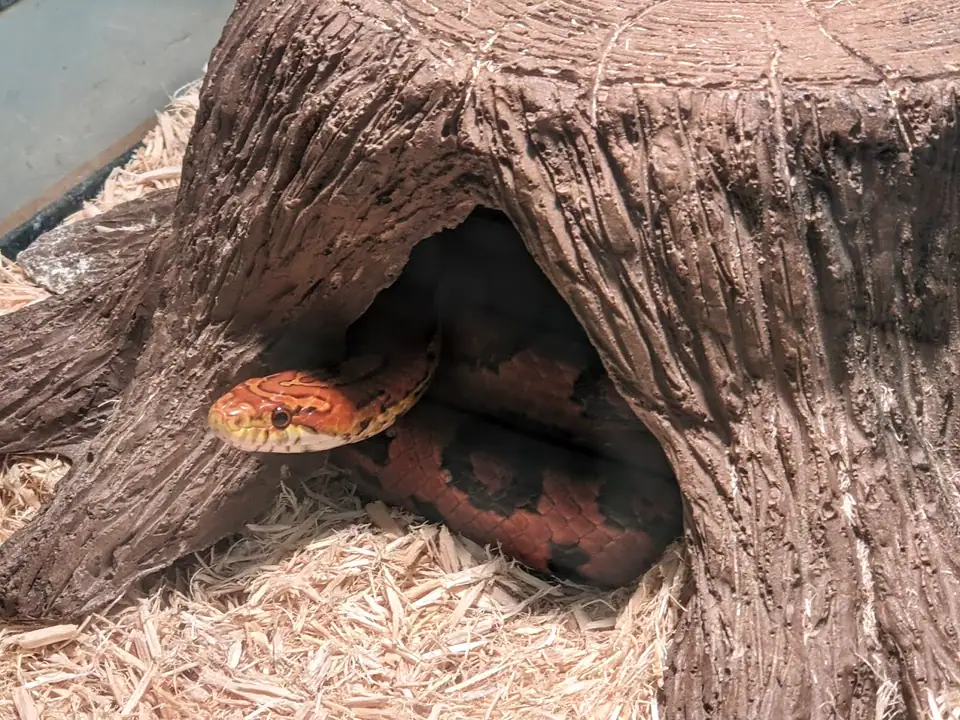
Setup guide
Corn Snake, Hognose and King Snake Enclosures: Setup by Species
Enclosure sizes, temperatures, humidity, locking lids and hides for corn snakes, western hognoses and king snakes, from vet, zoo and herp society sources.
Setup guide
Leopard Gecko Tank Setup: Tank Size, Heat Mat, Hides and Substrate
Leopard gecko tank size, warm and cool temperatures, heat mat and thermostat, three hides, substrate and UVB, from VCA, the RSPCA and the UV-Tool study.