EnclosuresComparison
Ball Python Enclosure: PVC vs Glass, Humidity and Heat
Ball python enclosure size, PVC vs glass vs wood, humidity for clean sheds, heat on a thermostat, hides and substrate, from VCA, the RSPCA and a herp society.
We earn from qualifying purchases through links on this page. How we make money.
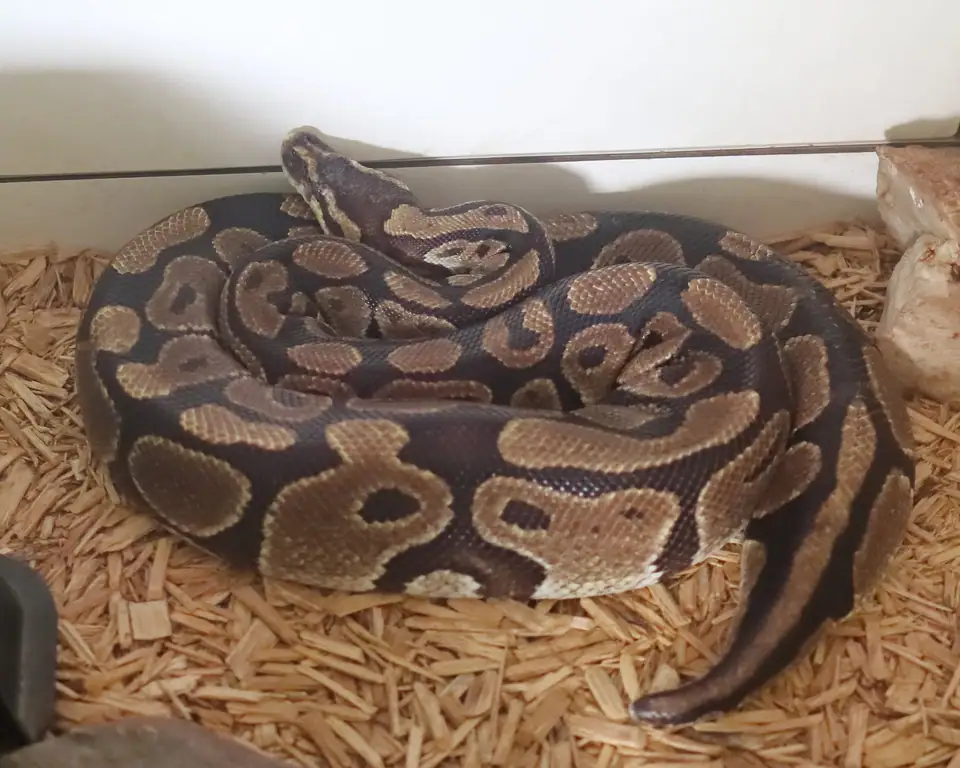
An adult ball python needs an enclosure of about 48 by 24 by 24 inches (Phoenix Herpetological Society), or at least as long as the snake (RSPCA). It needs a warm side near 88 to 92°F, a cooler side, humidity around 50 to 60 percent, two or more hides, and every heat source on a thermostat.
How big does a ball python get?
VCA says adults generally do not grow beyond 3 to 5 feet, and the Oregon Zoo calls the species the smallest of the African pythons at 3 to 4 feet. They are long-lived: Phoenix Herpetological Society gives 20 to 30 years in captivity and the RSPCA more than 20, while VCA’s owning page says 10 to 20 years depending on care.
What size enclosure?
| Source | Adult enclosure |
|---|---|
| Phoenix Herpetological Society | 48 x 24 x 24 in recommended for most adults |
| RSPCA | At least as long as the snake: 120 x 40 x 40 cm for a 120 cm python |
| VCA Animal Hospitals | “The largest cage possible”, escape-proof, with sealed seams and a secure top that locks |
Measure any tank sold as a ball python setup, including the 40-gallon breeder tanks often suggested, against both adult figures before you buy.
PVC vs glass vs wood
Our vet and herpetological sources do not rank the materials, and none of them measured how well each holds humidity, so we do not either. The real differences come from how heat and light have to be fitted, and those are set by maker instructions:
| What to check | Glass with a screen top | PVC or wood, closed top |
|---|---|---|
| UVB lamp | Can sit above the mesh; mesh blocks part of the UVB | Sits inside the enclosure, behind a guard |
| Heat lamp or emitter | Outside, above the mesh | Inside, behind a guard (RSPCA) |
| Under-tank heat mat | Zoo Med’s ReptiTherm is rated for glass | Zoo Med says not on wood or plastic cages (one Mini model excepted) |
| Ceramic heat emitter | Zoo Med: never mount one inside an enclosure | Check the heater maker’s rules before mounting anything inside |
Zoo Med and VCA both say glass and most plastics block UVB, so no clear panel should sit between a UVB lamp and the snake. Whatever the material, check the lid: VCA asks for a secure top that locks, and the RSPCA says the enclosure must be secure to prevent escapes.
PVC snake enclosures in 4x2x2 and 36x18x18 sizes
Live listings, shown by eBay
Opens eBay in a new tab. Check condition, seller feedback and returns.
What humidity does a ball python need?
The RSPCA gives about 50 to 60 percent, misted up to around 80 percent, and Phoenix Herpetological Society says 60 percent for respiratory health and proper shedding. It warns that low humidity may cause incomplete sheds and retained eye caps.
Three things help, all from the sources:
- A big water bowl. VCA says a large, heavy ceramic bowl that cannot spill easily may help maintain humidity. The RSPCA puts it at the cool end and changes it daily.
- A substrate that holds moisture. Phoenix Herpetological Society lists cypress mulch, coco coir, reptile soil mixes and bioactive mixes. The RSPCA says organic reptile soils hold humidity without going moldy, and advises against sand because it may irritate the skin.
- A hygrometer, so you measure instead of guessing.
How many hides?
Phoenix Herpetological Society says always two: one on the warm side and one on the cool side. The RSPCA suggests several at both ends so the snake can choose its temperature without leaving cover.
Hides, hygrometers, misters and feeding tongs
Live listings, shown by eBay
Opens eBay in a new tab. Check condition, seller feedback and returns.
Heat and light
| Zone | Phoenix Herpetological Society | RSPCA |
|---|---|---|
| Basking area | 88 to 92°F | 30 to 32°C (about 86 to 90°F) |
| Cool side | 74 to 80°F | 24 to 26°C (about 75 to 79°F) |
| Night | Not stated | Non-light heat such as a ceramic heater, if needed |
Phoenix Herpetological Society recommends heat lamps or emitters over heat mats, and says to always use a thermostat with any heat source to prevent burns. The RSPCA adds that a lamp needs a guard so the snake cannot be burned.
Burn risk
VCA explains that burns happen when a snake seeks a warm spot that is too hot or stays on it too long. A thermostat on every heater and a guard around every bulb are the fixes the sources give. VCA also says to avoid hot rocks. See heat lamps and thermostats.
UVB for ball pythons
VCA says veterinarians are divided on UV for snakes but that it is not harmful and may be beneficial. The RSPCA asks for a gradient from UV Index 1.0 in the basking zone to zero in the shade, and the UV-Tool study (Baines et al. 2016) places ball pythons in Ferguson zone 2, the partial sun or occasional baskers.
Ceramic heat emitters, heat projectors and lamp guards
Live listings, shown by eBay
Opens eBay in a new tab. Check condition, seller feedback and returns.
Feeding
Phoenix Herpetological Society feeds frozen-thawed rodents sized to the snake’s body width, weekly for juveniles and every 10 to 14 days for adults. VCA says snakes should be trained to eat dead prey, and that even a small bite from a live mouse can cause a severe, potentially life-threatening infection. The RSPCA feeds young pythons every five or six days and adults every 7 to 14 days, using tongs to offer the food inside the vivarium. VCA notes that ball pythons sometimes do not recognize white laboratory mice as prey, and that brown gerbils may be offered instead. We do not link feeder rodents.
For smaller colubrid snakes, see corn snake, hognose and king snake setups. The reptile supplies checklist has the full list, and the UVB lighting guide covers low-output lamps.
Frequently asked questions
What size enclosure does an adult ball python need?
Phoenix Herpetological Society recommends 48 by 24 by 24 inches for most adults. The RSPCA sizes the vivarium to the snake: a 120 cm snake needs at least 120 cm long, 40 cm wide and 40 cm deep.
What humidity does a ball python need?
The RSPCA says about 50 to 60 percent, rising to around 80 percent after misting. Phoenix Herpetological Society says 60 percent and warns that low humidity can cause incomplete sheds and retained eye caps.
Is PVC or glass better for a ball python?
Our vet and herpetological sources do not rank the materials. The practical differences come from maker rules: glass with a screen top lets lamps sit outside, while in a closed PVC or wood enclosure heaters sit inside and must be guarded, and some heat mats are rated for glass only.
Do ball pythons need UVB?
VCA says veterinarians are divided but that UV light is not harmful and may be beneficial. The RSPCA asks for a gentle gradient up to UV Index 1.0, and the UV-Tool study puts ball pythons in Ferguson zone 2.
Should I feed my ball python live or frozen mice?
Frozen-thawed. VCA says snakes should be trained to eat dead prey because it is more humane and safer, and that a bite from a live mouse can cause a severe, potentially life-threatening infection.
Sources
- Snakes - ConstrictorVCA Animal Hospitals
- Snakes - HousingVCA Animal Hospitals
- Snakes - FeedingVCA Animal Hospitals
- Snakes - OwningVCA Animal Hospitals
- How To Care For a Royal PythonRSPCA
- Ball Python Care GuidePhoenix Herpetological Society
- Ball pythonOregon Zoo
- How much UVB does my reptile need? The UV-Tool, a guide to the selection of UV lighting for reptiles and amphibians in captivity (Baines et al. 2016)Journal of Zoo and Aquarium Research
- Lighting & UVB EducationZoo Med Laboratories
- ReptiTherm Under Tank Heater instructionsZoo Med Laboratories
- Ceramic Heat Emitter instructionsZoo Med Laboratories
- Reptiles and Amphibians (Healthy Pets)CDC
Filed under EnclosuresStart here: Reptile Supplies Checklist: What Every Enclosure Needs, by Species
Related setups and guides
Checklist
Reptile Supplies Checklist: What Every Enclosure Needs, by Species
The supplies every reptile enclosure needs, and a species table of adult size, enclosure, basking heat, UVB zone and diet, each from a named vet or zoo source.
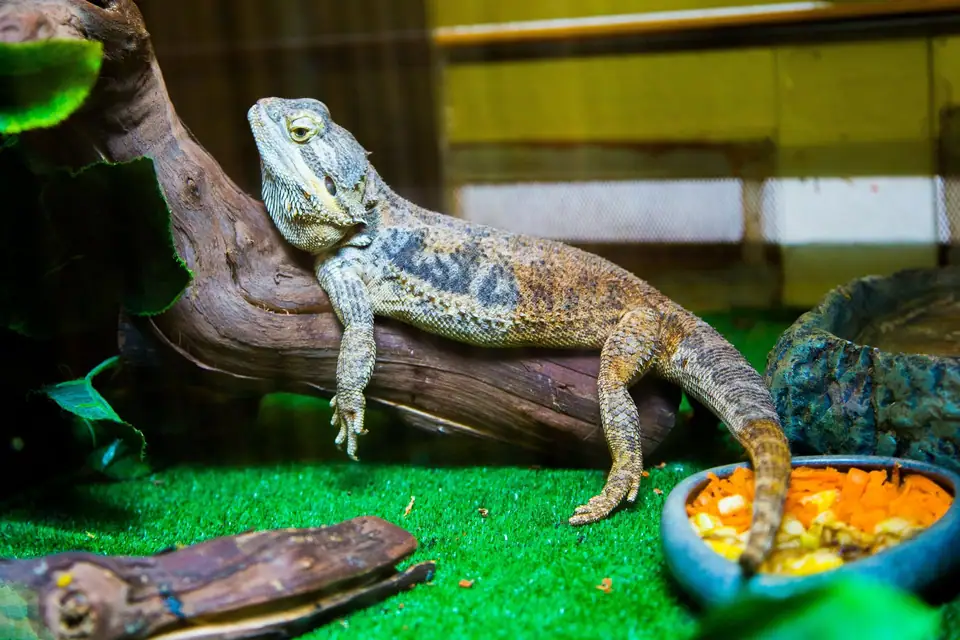
Setup guide
Bearded Dragon Enclosure: Size, Setup and the Gear It Needs
How big a bearded dragon enclosure should be, basking and cool-side temperatures, UVB, heat, substrate and hides, from VCA, the RSPCA and the UV-Tool study.
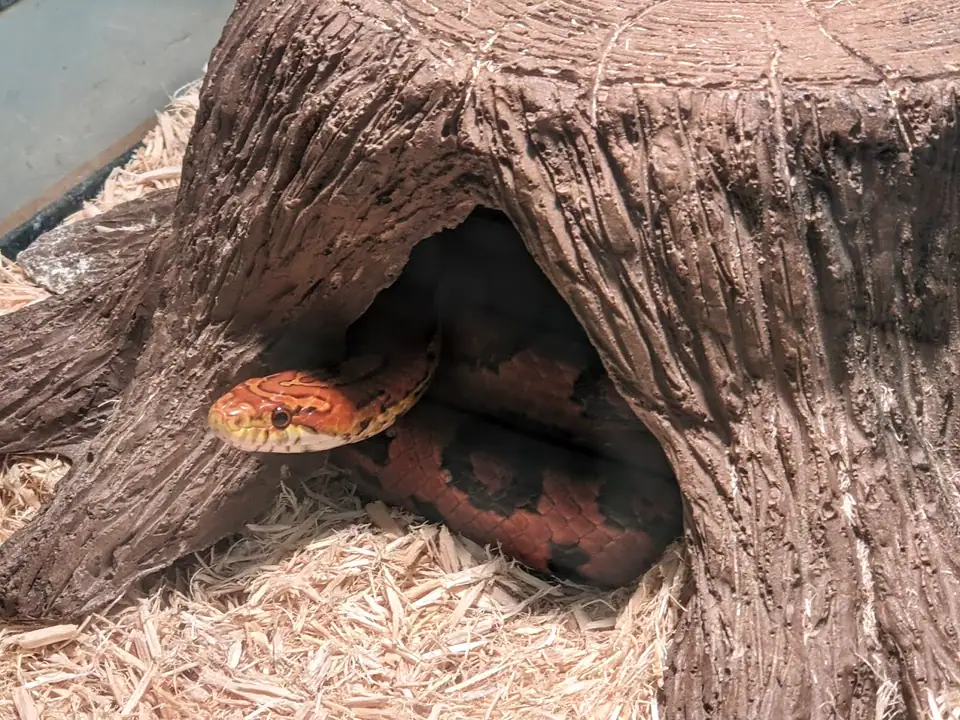
Setup guide
Corn Snake, Hognose and King Snake Enclosures: Setup by Species
Enclosure sizes, temperatures, humidity, locking lids and hides for corn snakes, western hognoses and king snakes, from vet, zoo and herp society sources.
Setup guide
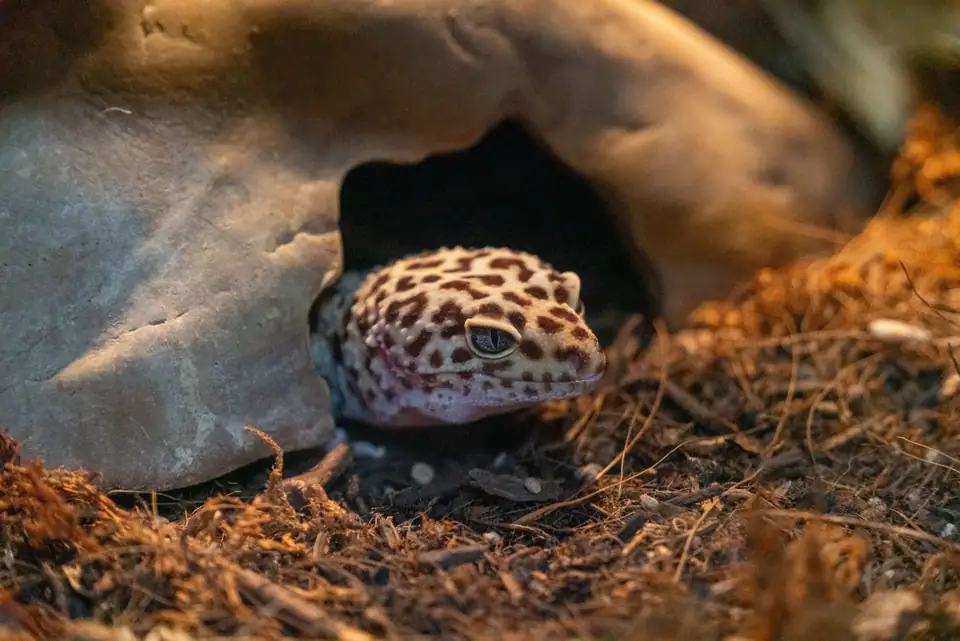
Leopard Gecko Tank Setup: Tank Size, Heat Mat, Hides and Substrate
Leopard gecko tank size, warm and cool temperatures, heat mat and thermostat, three hides, substrate and UVB, from VCA, the RSPCA and the UV-Tool study.