EnclosuresSetup guide
Leopard Gecko Tank Setup: Tank Size, Heat Mat, Hides and Substrate
Leopard gecko tank size, warm and cool temperatures, heat mat and thermostat, three hides, substrate and UVB, from VCA, the RSPCA and the UV-Tool study.
We earn from qualifying purchases through links on this page. How we make money.
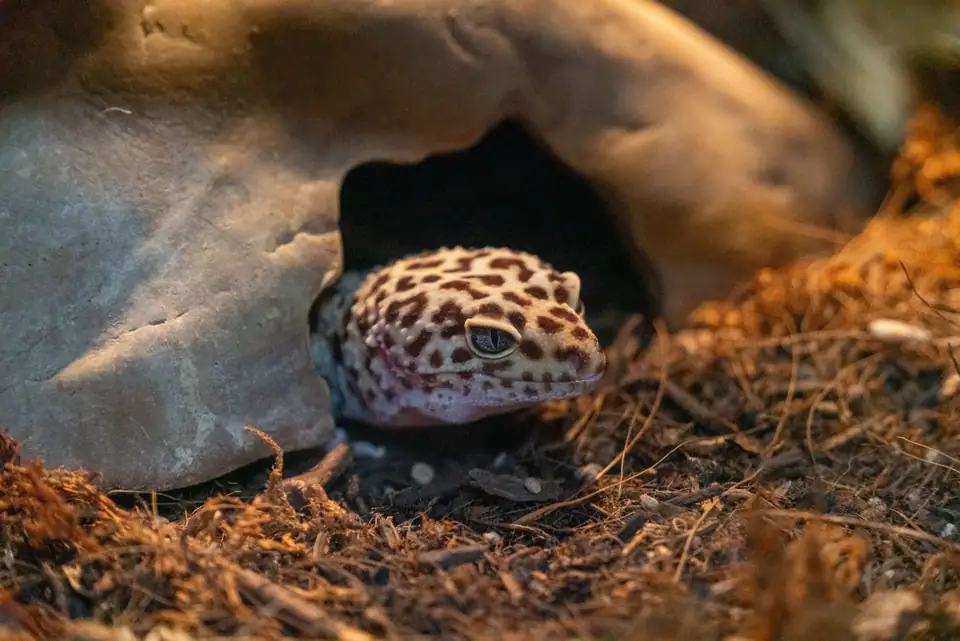
A leopard gecko needs a tank of at least 10 gallons (VCA) or 60 by 40 by 30 cm (RSPCA), a warm end near 82 to 86°F and a cooler end, heat on a thermostat, at least three hides including a humid one, and a solid or fine substrate. Sources differ on UVB: VCA calls it recommended, the RSPCA required.
How big should a leopard gecko tank be?
Adults are small. VCA puts them at 5 to 10 inches, and San Diego Zoo Wildlife Alliance gives 7.1 to 7.9 inches for females and 7.9 to 11 inches for males. VCA says they can live 10 to 15 years with good care, and the RSPCA says up to 20.
The two vet-led sources set different minimums for one gecko:
| Source | Minimum for one adult | Notes |
|---|---|---|
| VCA Animal Hospitals | 10-gallon tank or container | At least 6 inches (15 cm) high |
| RSPCA | 60 cm long, 40 cm high, 30 cm deep | About 24 x 16 x 12 inches, roughly twice VCA’s volume |
Both figures are minimums for a single gecko. Glass terrariums open from the top or the front; the listings below are front-opening models in the sizes keepers use most, so check the dimensions against both minimums before you buy.
Front-opening glass terrariums for leopard geckos
Live listings, shown by eBay
Opens eBay in a new tab. Check condition, seller feedback and returns.
What temperatures does a leopard gecko need?
VCA says leopard geckos do best with the cage in the mid-80s Fahrenheit (about 30°C) and can tolerate nights as low as 70°F (21°C). The RSPCA splits the tank into two ends, which is how most keepers set it up:
| Zone | RSPCA figure | Fahrenheit (our conversion) |
|---|---|---|
| Warm end, over the heat | 28 to 30°C | 82 to 86°F |
| Cool end | 24 to 26°C | 75 to 79°F |
| Night heat, only if the room falls below 18°C | Ceramic heater set to 18 to 20°C | 64 to 68°F |
The RSPCA says to check the warm zone with a digital thermometer, and to aim for humidity of about 30 to 40 percent, read with a hygrometer.
Heat mat or overhead heat?
The sources present both, so it is a real choice rather than a right answer:
- Heat from below. The RSPCA uses a reptile heat mat on one side of a wooden vivarium, or under half the base of a glass one, connected to an on/off thermostat with the probe over the mat. VCA lists heat tapes and under-tank heaters among “great” heat sources.
- Heat from above. VCA also lists low-level basking lights. The RSPCA adds a ceramic heater, which gives no light, for nights when the room gets cold.
Whichever you pick, it goes on a thermostat. The heat lamps and thermostats guide explains which thermostat type suits a mat and which suits a bulb.
No hot rocks
VCA says in-tank hot rocks are not recommended because they may create hot spots that can burn your gecko. Heat the tank from a mat or lamp that the gecko cannot sit directly on, and control it with a thermostat.
Thermostats and heat mats
Live listings, shown by eBay
Opens eBay in a new tab. Check condition, seller feedback and returns.
How many hides does a leopard gecko need?
At least three. The RSPCA says to put several hides at either end so the gecko can pick its temperature without giving up feeling secure, and to add another hide with a waterproof bottom and damp moss as a humid hide. VCA also recommends a hide box plus wet sphagnum moss, cypress mulch or vermiculite to help with moisture and shedding.
A simple layout: one hide on the warm end, one on the cool end, and the humid hide in between, with a shallow water dish.
What substrate is safe?
VCA says never to use coarse sand, corncob bedding or crushed walnut shells, because they can be swallowed and block the intestines. It lists reptile carpet, bark, paper towels and newspaper as acceptable. The RSPCA also rules out calcium sand and beech chips for the same impaction risk, keeps juveniles on non-loose substrate, and allows a mix of about half organic soil and half sand for healthy adults.
Does a leopard gecko need UVB?
UVB: sources differ
VCA says UVB is not required but is recommended, with the lamp 10 to 12 inches from the gecko. The RSPCA says leopard geckos need a gradient from UV Index 0.7 in the basking zone to zero in the shade. The UV-Tool study (Baines et al. 2016) puts the species in Ferguson zone 1, the low-UVB zone for crepuscular or shade-dwelling reptiles, and notes that leopard geckos made vitamin D3 under low-level UVB.
If you add UVB, use a low-output lamp and give the gecko shade to retreat into. The UVB lighting guide covers lamp types and distances.
Feeding and supplements
VCA says leopard geckos eat mainly live, moving insects: juveniles every one to two days, adults two to three times a week. The RSPCA feeds juveniles daily and adults every other day. Both say to dust insects with calcium and keep a small dish of plain calcium powder in the tank. This site does not link live feeder insects.
Hides, humid hides, thermometers and hygrometers
Live listings, shown by eBay
Opens eBay in a new tab. Check condition, seller feedback and returns.
The reptile supplies checklist lists every item in one place. For a larger lizard, compare the bearded dragon enclosure guide; for snakes that share the same heat and hide logic, see corn snake, hognose and king snake setups.
Frequently asked questions
What size tank does a leopard gecko need?
VCA says a single leopard gecko can live in a 10-gallon tank at least 6 inches high. The RSPCA sets a larger minimum for one adult: 60 cm long, 40 cm high and 30 cm deep, about 24 by 16 by 12 inches.
Do leopard geckos need a heat mat or a heat lamp?
Either can work. VCA lists heat tapes, under-tank heaters and low-level basking lights. The RSPCA uses a heat mat under part of the floor on an on/off thermostat, with a ceramic heater at night only if the room gets cold.
How cold is too cold for a leopard gecko at night?
VCA says leopard geckos can tolerate night temperatures as low as 70°F (21°C). The RSPCA adds extra heat only if the room drops below 18°C (64°F), using a ceramic heater set to 18 to 20°C on a thermostat.
Do leopard geckos need UVB?
Sources differ. VCA says UVB is not required but is recommended. The RSPCA says leopard geckos need a gentle gradient, from UV Index 0.7 in the basking zone to zero in the shade, which matches the low-UVB zone 1 in the UV-Tool study.
What is the best substrate for a leopard gecko?
VCA lists reptile carpet, paper towels and newspaper among suitable options and warns against coarse sand, corncob bedding and crushed walnut shells, which can be swallowed and block the intestines.
Sources
- Leopard Geckos: Care and FeedingVCA Animal Hospitals
- How To Care For a Leopard GeckoRSPCA
- Leopard GeckoSan Diego Zoo Wildlife Alliance
- How much UVB does my reptile need? The UV-Tool, a guide to the selection of UV lighting for reptiles and amphibians in captivity (Baines et al. 2016)Journal of Zoo and Aquarium Research
- Reptiles and Amphibians (Healthy Pets)CDC
Filed under EnclosuresStart here: Reptile Supplies Checklist: What Every Enclosure Needs, by Species
Related setups and guides
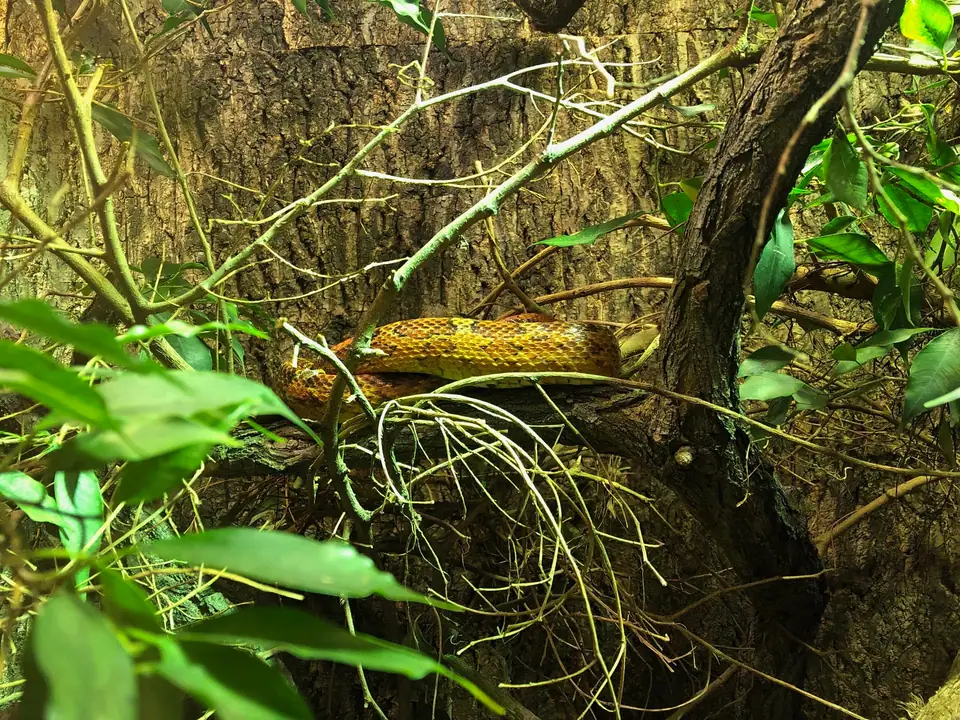
Checklist
Reptile Supplies Checklist: What Every Enclosure Needs, by Species
The supplies every reptile enclosure needs, and a species table of adult size, enclosure, basking heat, UVB zone and diet, each from a named vet or zoo source.
Comparison
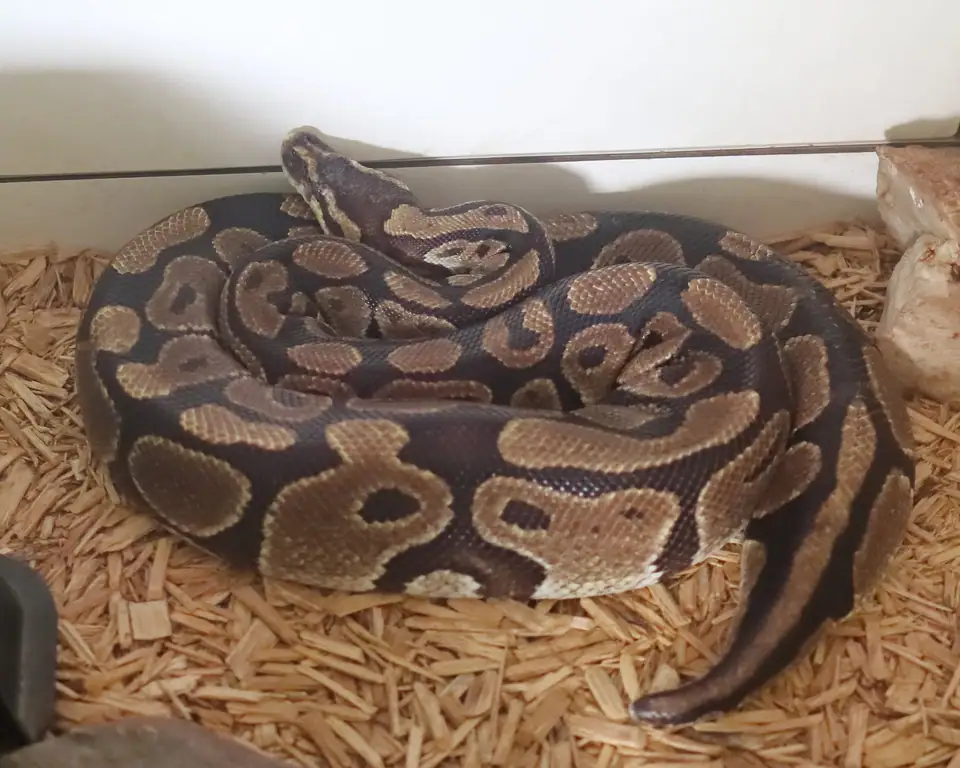
Ball Python Enclosure: PVC vs Glass, Humidity and Heat
Ball python enclosure size, PVC vs glass vs wood, humidity for clean sheds, heat on a thermostat, hides and substrate, from VCA, the RSPCA and a herp society.
Setup guide
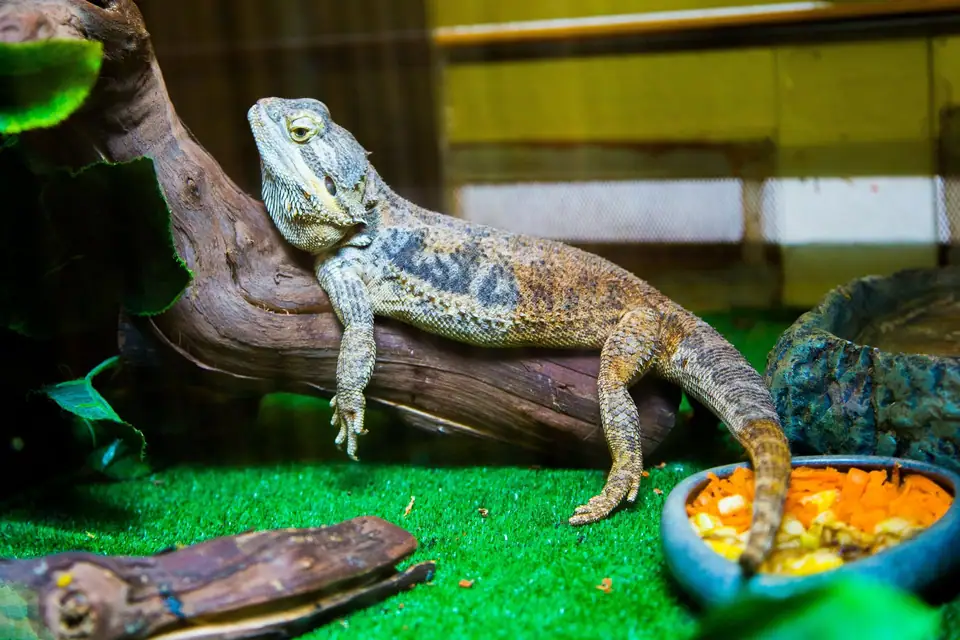
Bearded Dragon Enclosure: Size, Setup and the Gear It Needs
How big a bearded dragon enclosure should be, basking and cool-side temperatures, UVB, heat, substrate and hides, from VCA, the RSPCA and the UV-Tool study.
Setup guide
Corn Snake, Hognose and King Snake Enclosures: Setup by Species
Enclosure sizes, temperatures, humidity, locking lids and hides for corn snakes, western hognoses and king snakes, from vet, zoo and herp society sources.