Turtles and tortoisesSetup guide
Turtle Tank Setup: Tank Size, Filter, Basking Dock and UVB
How big a turtle tank should be, water and basking temperatures, filters, water changes, basking docks, UVB and CDC Salmonella advice, from VCA and the RSPCA.
We earn from qualifying purchases through links on this page. How we make money.
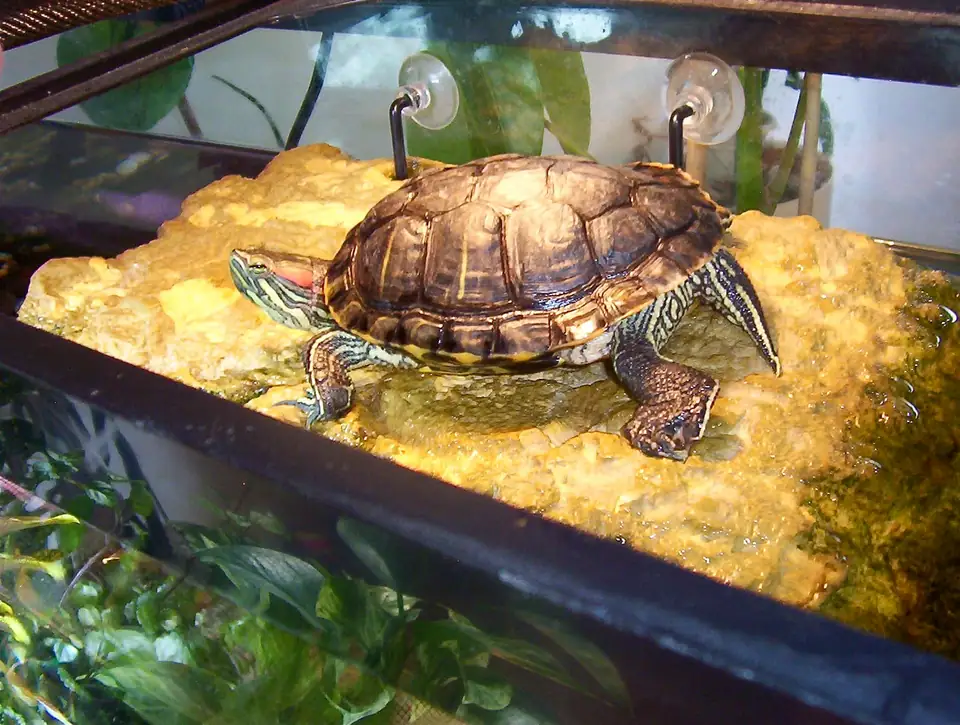
An aquatic turtle needs about 10 gallons of water per inch of shell (VCA), so an adult red-eared slider needs 70 to 120 gallons. It also needs a strong filter, a dry basking dock under a heat lamp, UVB and weekly water changes. The CDC advises hand washing after every contact and no pet turtles for children under 5.
How big should a turtle tank be?
VCA puts adult red-eared slider males at 7 to 9 inches of shell and females at 10 to 12 inches. The RSPCA reports sliders living around 30 to 40 years in captivity, so the tank you plan is for decades.
The sources give matching rules:
| Source | Water | Dry area |
|---|---|---|
| VCA Animal Hospitals | 10 gallons per inch of shell | Basking zone of 15 to 25% of the surface |
| RSPCA | 80 liters per 5 cm of shell (about the same) | A dry area under the heat lamp with a ramp |
| California Turtle and Tortoise Club | Swimming area at least as deep as the turtle is wide | Somewhere the turtle can get completely out of the water |
By VCA’s rule, a 10 gallon tank fits a turtle with a 1 inch shell. US law bans selling turtles under 4 inches, so the smallest turtle sold legally already needs about 40 gallons, and an adult female 100 gallons or more. VCA’s advice is to start growing turtles in a large tank from the beginning.
Water and basking temperatures
| Zone | VCA | RSPCA |
|---|---|---|
| Water | 75 to 82°F | About 25°C (77°F) for hatchlings, 22°C (72°F) for adults |
| Basking area | 75 to 88°F | 30 to 35°C (86 to 95°F) |
| Night water | Not below 65 to 70°F | Not stated |
The California Turtle and Tortoise Club gives 75 to 85°F for water. The sources differ most on the basking spot, so measure it and ask your reptile vet where in the range to aim for your species.
Filters and water changes
VCA says the better, more powerful filters pump water out of the tank, process it and return it, a description that fits external canister filters. The RSPCA asks for powerful filtration and regular maintenance.
The sources differ on water changes: VCA says the water must be changed at least once a week, or more often if it gets dirty, while the RSPCA uses a 20 percent change every week alongside the filter. Either way, a filter does not replace changing the water.
Canister filters, basking docks and ramps
Live listings, shown by eBay
Opens eBay in a new tab. Check condition, seller feedback and returns.
Basking dock and heat
VCA says the dry zone must let the turtle climb completely out of the water. The RSPCA puts it under the heat lamp, big enough to support the turtle, with a ramp from the water. A floating dock or an above-tank basking platform both meet that test if the whole turtle fits on it.
UVB for turtles
UVB for aquatic turtles
VCA says the lamp should emit UVB (290 to 320 nm), sit within 12 to 18 inches of the turtle and be replaced every six months or as the maker directs. The RSPCA asks for a 7 to 12 percent UVB lamp over two-thirds of the tank, giving UV Index 3.0 to 5.0 at the basking spot. The UV-Tool study (Baines et al. 2016) puts red-eared sliders in Ferguson zone 3 to 4.
The UVB lighting guide compares tube and mercury vapor lamps, and the heat lamps and thermostats guide covers the basking lamp.
UVB lamps and fixtures for turtle tanks
Live listings, shown by eBay
Opens eBay in a new tab. Check condition, seller feedback and returns.
Salmonella: what the CDC and FDA say
Hygiene for turtle keepers
The CDC says pet turtles are not recommended for children younger than 5, adults 65 and older, or people with weakened immune systems. Wash hands with soap and water right after touching or feeding a turtle or cleaning its tank, and do not kiss or snuggle it. The CDC says never to use food preparation areas to clean habitats; the FDA adds not to clean them in a kitchen sink, bathroom sink or bathtub.
The CDC’s guidance also allows a laundry sink or bathtub if cleaning outside is not possible, so the two agencies differ on the bathtub. The stricter FDA line is the one we follow: clean outdoors or in a laundry sink.
The US ban on selling small turtles is in federal rules (21 CFR 1240.62): live turtles with a shell under 4 inches may not be sold or offered for sale. The FDA says the ban has applied since 1975 because of Salmonella.
For diet, see turtle and tortoise food. Land-dwelling shelled pets need a very different home: see tortoise enclosures and the reptile supplies checklist.
Frequently asked questions
Is a 10 gallon tank big enough for a turtle?
No. VCA's rule is 10 gallons of water per inch of shell, and US law bans selling turtles under 4 inches, so even the smallest turtle sold legally needs about 40 gallons by that rule. An adult female red-eared slider at 10 to 12 inches needs 100 gallons or more.
What temperature should turtle tank water be?
VCA says 75 to 82°F, not falling below 65 to 70°F at night. The RSPCA gives about 25°C (77°F) for hatchlings, easing to 22°C (72°F) for adults, so the sources differ for grown turtles.
How often should you change turtle tank water?
VCA says at least once a week, or more often if it gets dirty. The RSPCA says a 20 percent change every week alongside a filter, to dilute waste the filter cannot break down.
Do aquatic turtles need UVB?
Yes. VCA says the light should be in the UVB range and within 12 to 18 inches of the turtle. The RSPCA asks for a 7 to 12 percent UVB lamp over two-thirds of the tank, and the UV-Tool study puts red-eared sliders in Ferguson zone 3 to 4.
Are pet turtles safe for young children?
The CDC says pet turtles are not recommended for children younger than 5, adults 65 and older, or people with weakened immune systems, because turtles can carry Salmonella germs. Everyone should wash their hands after touching a turtle or its tank.
Sources
- Housing Aquatic TurtlesVCA Animal Hospitals
- Owning Aquatic TurtlesVCA Animal Hospitals
- How To Care For a TerrapinRSPCA
- Water Turtle CareCalifornia Turtle and Tortoise Club
- How much UVB does my reptile need? The UV-Tool, a guide to the selection of UV lighting for reptiles and amphibians in captivity (Baines et al. 2016)Journal of Zoo and Aquarium Research
- Reptiles and Amphibians (Healthy Pets)CDC
- Salmonella Outbreaks Linked to Pet TurtlesCDC
- Pet Turtles: A Source of GermsU.S. Food and Drug Administration
- 21 CFR 1240.62, Turtles intrastate and interstate requirementsLegal Information Institute, Cornell Law School
Filed under Turtles and tortoisesStart here: Reptile Supplies Checklist: What Every Enclosure Needs, by Species
Related setups and guides
Checklist
Reptile Supplies Checklist: What Every Enclosure Needs, by Species
The supplies every reptile enclosure needs, and a species table of adult size, enclosure, basking heat, UVB zone and diet, each from a named vet or zoo source.
Setup guide
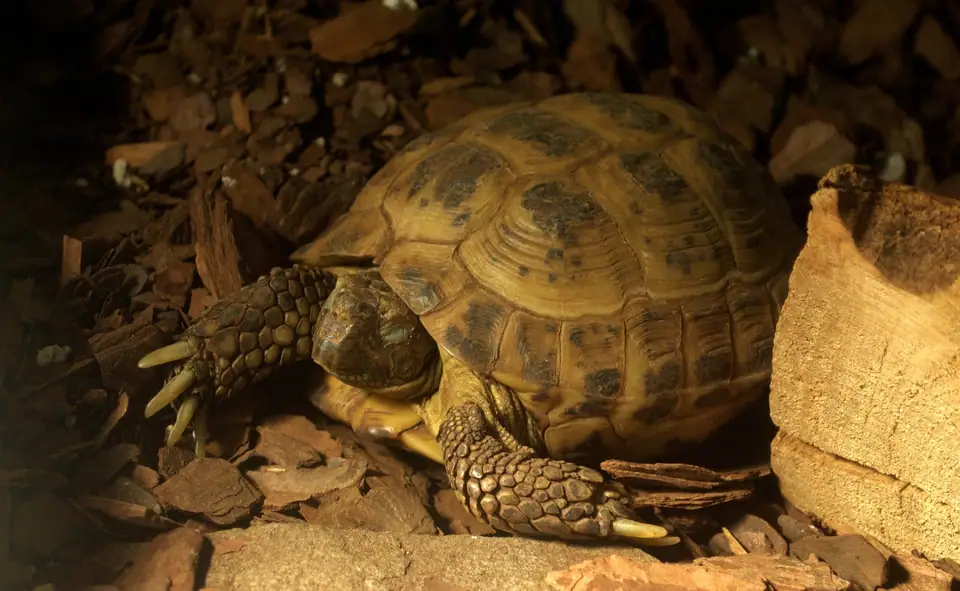
Tortoise Enclosures: Tortoise Tables, Indoor Setups and Outdoor Pens
Why tortoise tables beat glass tanks, room for Russian, Hermann's and sulcata tortoises, outdoor pens, digging and UVB, from vet and tortoise sources.
Photo: Futureman1199 / Wikimedia Commons, CC BY-SA 3.0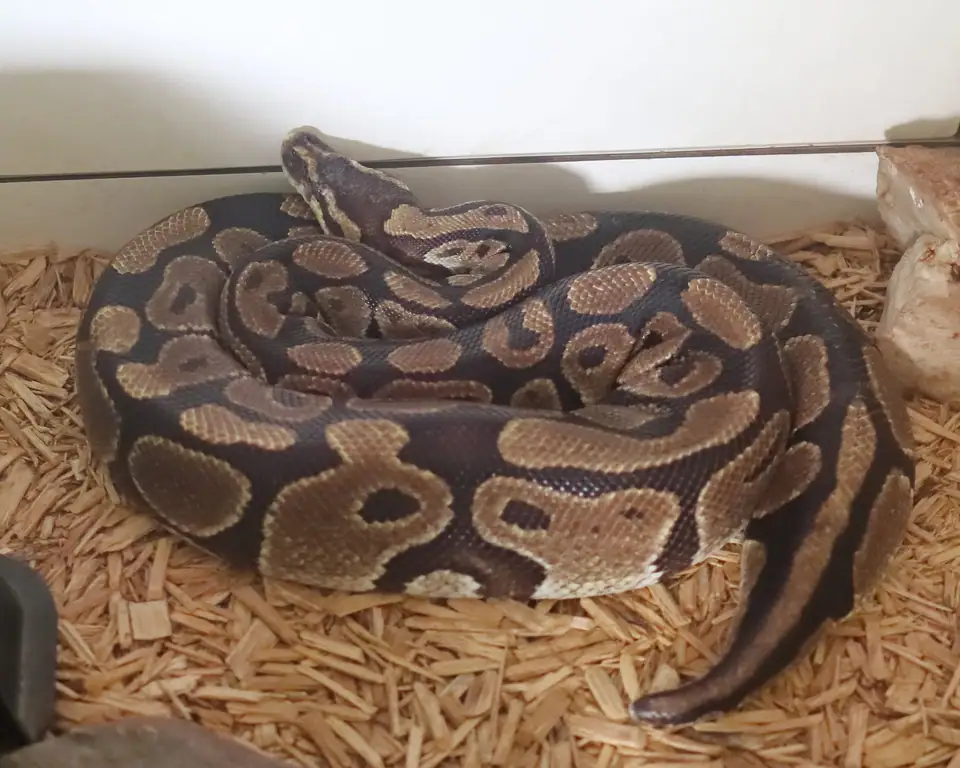
Comparison
Ball Python Enclosure: PVC vs Glass, Humidity and Heat
Ball python enclosure size, PVC vs glass vs wood, humidity for clean sheds, heat on a thermostat, hides and substrate, from VCA, the RSPCA and a herp society.
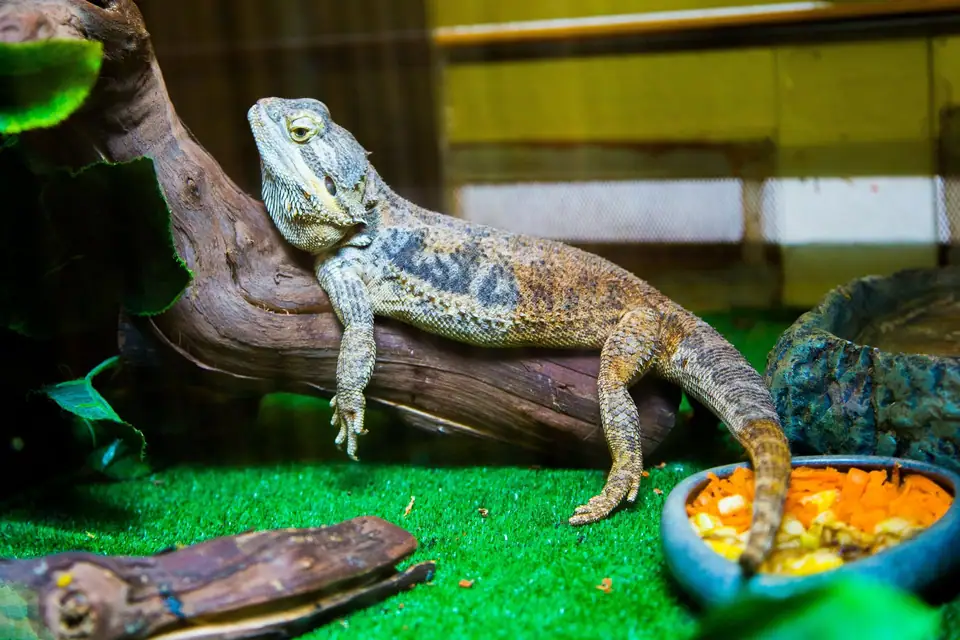
Setup guide
Bearded Dragon Enclosure: Size, Setup and the Gear It Needs
How big a bearded dragon enclosure should be, basking and cool-side temperatures, UVB, heat, substrate and hides, from VCA, the RSPCA and the UV-Tool study.