Turtles and tortoisesSetup guide
Tortoise Enclosures: Tortoise Tables, Indoor Setups and Outdoor Pens
Why tortoise tables beat glass tanks, room for Russian, Hermann's and sulcata tortoises, outdoor pens, digging and UVB, from vet and tortoise sources.
We earn from qualifying purchases through links on this page. How we make money.
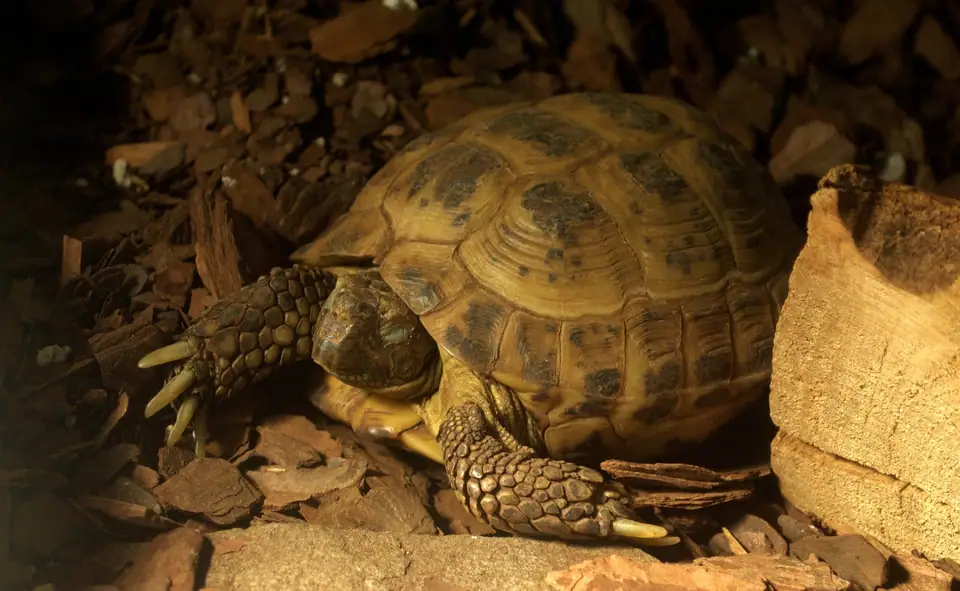
Indoors, keep a tortoise in an open-topped tortoise table rather than a glass tank, which Tortoise Trust links to poor ventilation and respiratory disease. Outdoors, give it a secure pen with walls it cannot climb, fencing buried against digging, and a cover against predators. Every indoor tortoise needs UVB, and sulcatas outgrow indoor housing entirely.
How big will your tortoise get?
Size decides everything else, and the common pet species are very different:
| Species | Adult size | Lifespan |
|---|---|---|
| Russian | 5 to 8 in (University of Illinois); 6 to 8 in, occasionally over 9 (California Turtle and Tortoise Club) | Not given by these sources |
| Hermann’s | About 4.7 to 9 in (Oakland Zoo) | 70 to 100 years (Oakland Zoo) |
| Sulcata (African spurred) | Almost 3 ft and up to 150 lb (VCA); males to 200 lb (San Diego Zoo Wildlife Alliance) | 80 to 100 years (San Diego Zoo Wildlife Alliance) |
VCA says Hermann’s, Greek and Russian tortoises generally reach a maximum of 10 inches. San Diego Zoo Wildlife Alliance warns that sulcatas grow quickly and get extremely large, and that in the wild they dig burrows up to 10 feet deep.
Tortoise table vs glass tank
Why not a glass tank?
Tortoise Trust lists the problems with enclosed tanks: poor ventilation, with a high rate of runny nose syndrome and other respiratory disease; too little space and temperature range for the tortoise to pick its own microclimate; and lethargy and other unnatural behavior. It recommends the tabletop terrarium, an open-topped tortoise table, instead.
A tortoise table is a wide, open box with low walls, set on legs or on the floor. Tortoise Trust also keeps juvenile sulcatas indoors in open-topped pens. For an adult sulcata it describes a 2 by 2 meter (about 6 by 6 foot) indoor grazing area, a second area the same size for sleeping, and a 7 by 4 meter (about 20 by 12 foot) outdoor grazing area: this is not an indoor pet for most homes.
Tortoise tables, tortoise houses and outdoor pens
Live listings, shown by eBay
Opens eBay in a new tab. Check condition, seller feedback and returns.
Outdoor pens: walls, digging and predators
Tortoises climb and dig, and the sources size fences for both:
- Walls. Tortoise Trust says Russian tortoises are highly proficient diggers that can climb near-vertical surfaces, and recommends walls at least 18 inches (45 cm) high.
- Below ground. The University of Illinois says to bury fencing one to two feet down. VCA says 6 inches. For Russians, use the deeper figure.
- Predators. The California Turtle and Tortoise Club says to protect tortoises from birds, cats, dogs and rats. Tortoise Trust adds a strong wire-mesh cover on a wooden frame where foxes or raccoons live.
- Dry ground. Tortoise Trust warns that Russians kept on damp ground can expect repeated skin, shell and respiratory infections.
Glass outdoors overheats
The California Turtle and Tortoise Club says never to put a tortoise or turtle outside in a glass aquarium, because it can heat up like a greenhouse. Its Russian tortoise sheet also warns that summer temperatures above 85°F can be a problem, so plan for shade in any outdoor pen.
Indoor heat and UVB
VCA says all tortoises need UV light and that the UV bulb must be replaced every six months. The UV-Tool study (Baines et al. 2016) puts Russian and Hermann’s tortoises in Ferguson zone 3 and sulcatas in zone 3 to 4, the sun-basking zones, so a strong UVB lamp over a basking spot, with shade elsewhere, is the pattern. Zoo Med says glass and most plastics filter out UVB, which is one more reason to use an open table.
VCA also links shell pyramiding in young tortoises to temperature and humidity that are not right, or to an imbalance of calcium, phosphorus or protein. Our sources did not give species basking temperatures we could verify, so ask a reptile veterinarian for your tortoise’s figures and measure them with a thermometer.
UVB lamps and fixtures for tortoise tables
Live listings, shown by eBay
Opens eBay in a new tab. Check condition, seller feedback and returns.
Food is covered in turtle and tortoise food, lamps in the UVB lighting guide, and water turtles in turtle tank setup. The reptile supplies checklist lists everything for each species.
Frequently asked questions
Can a tortoise live in a glass tank?
Tortoise Trust advises against it: enclosed tanks have poor ventilation, which it links to respiratory disease, and too little space and temperature range for the tortoise to choose its own spot. It recommends an open-topped tortoise table instead.
How big does a sulcata tortoise get?
Very big. VCA says almost 3 feet long and up to 150 pounds by 20 to 30 years of age, and San Diego Zoo Wildlife Alliance gives males up to 200 pounds. They can live 80 to 100 years, so plan for a grown sulcata before buying a small one.
Do tortoises need UVB?
Yes. VCA says all tortoises need a supply of UV light and that the bulb must be replaced every six months. The UV-Tool study puts Russian and Hermann's tortoises in Ferguson zone 3 and sulcatas in zone 3 to 4.
How deep should an outdoor tortoise fence go?
The University of Illinois says to bury fencing one to two feet underground because tortoises dig well. VCA's figure is 6 inches, so the sources differ; Russian tortoises are strong diggers, so use the deeper figure for them.
Can a tortoise stay outside in a glass aquarium?
No. The California Turtle and Tortoise Club says never to put a tortoise or turtle outside in a glass aquarium, because it can heat up like a greenhouse.
Sources
- Owning a TortoiseVCA Animal Hospitals
- Common Diseases of TortoisesVCA Animal Hospitals
- The tortoise and its careUniversity of Illinois College of Veterinary Medicine
- African Spurred TortoiseSan Diego Zoo Wildlife Alliance
- Understanding Indoor Housing and Vivarium Design for TortoisesTortoise Trust
- A Habitat for HorsfieldsTortoise Trust
- Care of the African spurred tortoise (Centrochelys sulcata)Tortoise Trust
- Russian Tortoise careCalifornia Turtle and Tortoise Club
- Desert Tortoise CareCalifornia Turtle and Tortoise Club
- Hermann's TortoiseOakland Zoo
- How much UVB does my reptile need? The UV-Tool, a guide to the selection of UV lighting for reptiles and amphibians in captivity (Baines et al. 2016)Journal of Zoo and Aquarium Research
- Lighting & UVB EducationZoo Med Laboratories
- Reptiles and Amphibians (Healthy Pets)CDC
Filed under Turtles and tortoisesStart here: Reptile Supplies Checklist: What Every Enclosure Needs, by Species
Related setups and guides
Checklist
Reptile Supplies Checklist: What Every Enclosure Needs, by Species
The supplies every reptile enclosure needs, and a species table of adult size, enclosure, basking heat, UVB zone and diet, each from a named vet or zoo source.
Setup guide
Turtle Tank Setup: Tank Size, Filter, Basking Dock and UVB
How big a turtle tank should be, water and basking temperatures, filters, water changes, basking docks, UVB and CDC Salmonella advice, from VCA and the RSPCA.
Photo: Beeblebrox / Wikimedia Commons, CC BY-SA 3.0
Comparison
Ball Python Enclosure: PVC vs Glass, Humidity and Heat
Ball python enclosure size, PVC vs glass vs wood, humidity for clean sheds, heat on a thermostat, hides and substrate, from VCA, the RSPCA and a herp society.
Setup guide
Bearded Dragon Enclosure: Size, Setup and the Gear It Needs
How big a bearded dragon enclosure should be, basking and cool-side temperatures, UVB, heat, substrate and hides, from VCA, the RSPCA and the UV-Tool study.